


For Gen Z travelers looking to experience the holidays somewhere new in 2027, Europe’s Christmas markets offer more than a festive backdrop. Meeting artisans, sampling regional specialties, and exploring the traditions behind the celebrations can reveal another side of a destination beyond its best-known attractions.
With Black Friday travel deals arriving this November, it’s a natural time to start planning for the 2027 holiday season, with opportunities to save hundreds of dollars on select trips. Choosing a destination now gives travelers time to compare itineraries, coordinate vacation days, and build the trip into their budget. Some travel providers also offer interest-free monthly payment plans, allowing travelers to reserve a trip and spread the cost over time.
EF Ultimate Break rounded up several European destinations where travelers can experience the season, from Germany's historic markets to Italy's Christmas celebrations.
Germany and Switzerland: Christmas in the Alps
aletheia25 // Shutterstock
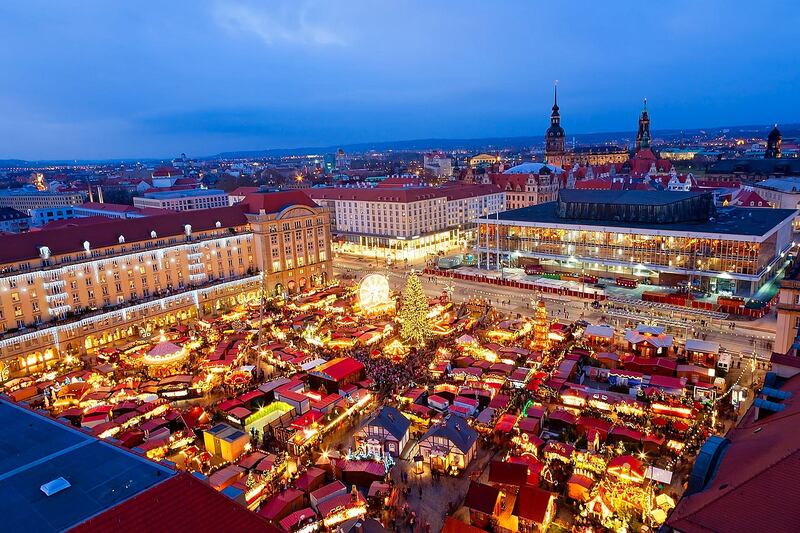
Germany is largely responsible for the Christmas market tradition as we know it. The Christkindlmarkt dates back to the 14th century, and the markets here are the real deal. Think wooden stalls selling handcrafted ornaments, the smell of roasted chestnuts and Glühwein (mulled wine) in the air, and lights strung across cobblestone streets in every direction.
Switzerland adds its own layer of charm, with alpine villages, snow-dusted chalets, and a version of St. Nicholas called Samichlaus, who arrives on Dec. 6 with a donkey and a bag of treats for children.
Prague, Vienna and Budapest: Christmas in Central Europe

ShapikMedia // Shutterstock
Central Europe does Christmas with a particular kind of drama that's hard to replicate anywhere else. In Prague, the Old Town Square transforms into one of the world's best-known Christmas markets, making it a popular stop for Gen Z travelers looking for photo opportunities. The medieval astronomical clock, the Gothic church towers and the glow of the market stalls create a setting that feels almost unreal.
Vienna takes a more refined approach. The city has multiple Christmas markets, but the one in front of the Rathaus (City Hall) is the standout. Vienna's Christmas market tradition dates back more than 700 years. Austrians celebrate St. Nicholas Day on Dec. 6, and Christmas Eve (Heiligabend) is the main event, when families gather for a quiet dinner and gift exchange. The city’s classical music tradition also peaks during the holiday season, with concerts and performances taking place across the city.
Budapest brings warmth and color to the mix. The Vörösmarty Square market is at the heart of the city’s Christmas celebrations, with Hungarian artisans, traditional kürtőskalács (chimney cake) and a festive atmosphere.
Edinburgh: Christmas with a side of gothic charm

plhaaa // Shutterstock
Scotland doesn’t celebrate anything halfway, and Edinburgh is no exception. The city’s holiday season is anchored by its Christmas market in the East Princes Street Gardens, set against the backdrop of Edinburgh Castle. If you’ve never seen it lit up at night, it's one of the more dramatic sights in all of Europe.
But what makes Christmas in Edinburgh feel different from other places is the atmosphere. The city’s medieval Old Town, the narrow closes (what locals call alleyways), the cozy pubs with fireplaces and whisky flights all add up to a holiday experience that feels more immersive than festive. Scotland also takes Hogmanay (New Year’s Eve) seriously, but even in the lead-up to Christmas, there’s a sense of celebration that’s hard to shake.
Italy: Christmas with a deep history

Mark Green // Shutterstock
Italy deserves its own section because the country does the holidays in a way that’s completely its own. In Italy, Christmas is a deeply cultural and religious celebration. Nativity scenes (called presepi) are everywhere — in churches, in shop windows, in town squares. Families gather on Christmas Eve for seafood dinners, particularly in southern Italy. The Feast of the Seven Fishes, a popular Italian American tradition, grew out of these regional customs and, as the name suggests, involves a lot of seafood.
Venice in December is quieter than during peak season, so visitors can often experience the canals, bridges, and calli (narrow streets) without the same crowds. The city takes on a different quality in winter, with misty mornings, fewer tourists, and a stillness that makes it feel almost cinematic.
Florence’s Christmas traditions are rooted in its Renaissance history. The city’s churches host elaborate nativity displays, and the Piazza della Repubblica market draws locals and visitors alike.
Rome does Christmas the way Rome does everything: with a lot of history behind it. Christmas Eve Mass at St. Peter’s Basilica is one of the most significant Catholic events of the year, drawing pilgrims and visitors from around the world. The Piazza Navona market runs through the holiday season and is one of the city’s best-known traditions. With baroque fountains, street performers, and vendors selling everything from roasted nuts to handmade ceramics, it’s also one of Europe’s more atmospheric holiday celebrations.
Why Christmas travel is worth it
Experiencing Christmas in another country can make a familiar holiday feel new again. Browsing market stalls in Prague, watching the lights reflect off the Danube in Budapest, or warming up with Glühwein in Germany offers a chance to experience the traditions that give each destination its character.
A guided group trip can help travelers better understand what they’re seeing. Traveling with a group also provides people to share those discoveries with, making a holiday abroad an option for Gen Z travelers even when friends’ schedules don’t align.
What to know before planning a European Christmas trip
Choose travel dates around the experiences that matter most. A St. Nicholas celebration may take place in early December, while a market might continue beyond Christmas. Opening dates, holiday hours, and ticket requirements vary by market, and keeping track of them can be stressful. When choosing a tour, look at the complete itinerary and what the price covers. Included accommodations, transportation between cities, sightseeing, and on-trip support can simplify planning and make the overall budget easier to understand. Consider how much free time is available, too, so there’s room to revisit a favorite market or explore independently.
Look beyond the advertised discount to eligible departures, inclusions, payment plans, and cancellation terms. If payment plans are available, they may also give Gen Z travelers more flexibility when budgeting for a Christmas market trip.
This story was produced by EF Ultimate Break and reviewed and distributed by Stacker.